


Types and Fundamentals of Centrifugal Pumps
Types and Fundamentals of Centrifugal Pumps for industrial applications.

The centrifugal pump was first built in 1689 by the French physicist Denis Papin. It operates by using a rotating impeller to generate centrifugal force, which accelerates and flings fluid outward from the impeller's center to its periphery, thereby enabling fluid transfer.
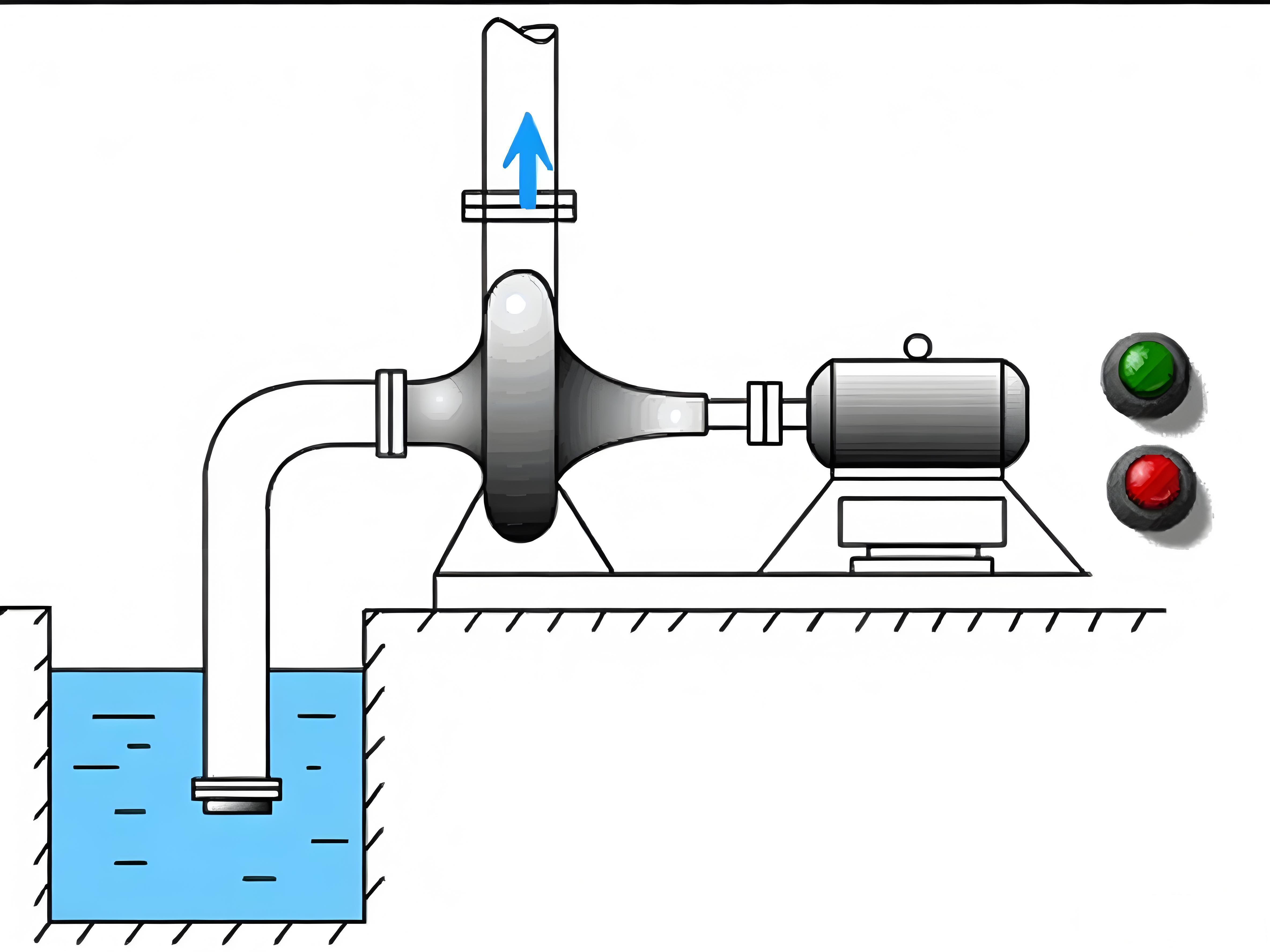
As a type of dynamic pump, centrifugal pumps can handle almost any liquid and are widely used in fluid transport systems for agricultural irrigation, sewage, mining, dredging, and more.
A centrifugal pump primarily consists of the pump casing, impeller, bearings, pump shaft, bracket, and sealing device.
The operation of a centrifugal pump is essentially a process of using centrifugal force to increase fluid pressure. This process can be divided into four stages: fluid intake, pressurization, discharge, and continuous circulation.
01 Fluid Intake
The rotation of the motor rotor drives the impeller to spin. This rotation generates centrifugal force. Under the action of this force, the fluid inside the pump is accelerated from the center of the impeller towards its periphery. As liquid at the impeller center decreases, a negative pressure (vacuum) is created. This vacuum generates suction at the pump inlet, drawing in additional fluid.
02 Fluid Pressurization
The drawn-in fluid accelerates and flows in a volute (spiral) path along the pump casing. As the internal flow channel is designed to gradually narrow, the fluid's velocity decreases while its pressure increases during this process, converting part of its kinetic energy into pressure energy.
03 Fluid Discharge
The pump outlet is typically designed with a reduced cross-section. As the pressurized fluid passes through this outlet, its pressure is further increased before being discharged from the system.
04 Continuous Operation
With the continuous rotation of the impeller, fluid is constantly being drawn in and discharged, allowing the centrifugal pump to operate in a sustained, continuous cycle.
Introduction to nine Types of Centrifugal Pumps
Centrifugal pumps designed for different functions vary in their design philosophy and application scenarios. Below is an introduction to the basic operating principles and typical uses of 9 common types of centrifugal pumps.
Single-Stage Centrifugal Pump
Features only one impeller. Simple structure, high head, easy maintenance. Agricultural irrigation, mining, municipal water supply, power generation, chemical industry.
Multi-Stage Centrifugal Pump
Contains two or more impellers in series. Capable of generating very high head and discharge pressure. Mine wastewater drainage, high-pressure water supply, oil field and petroleum services.
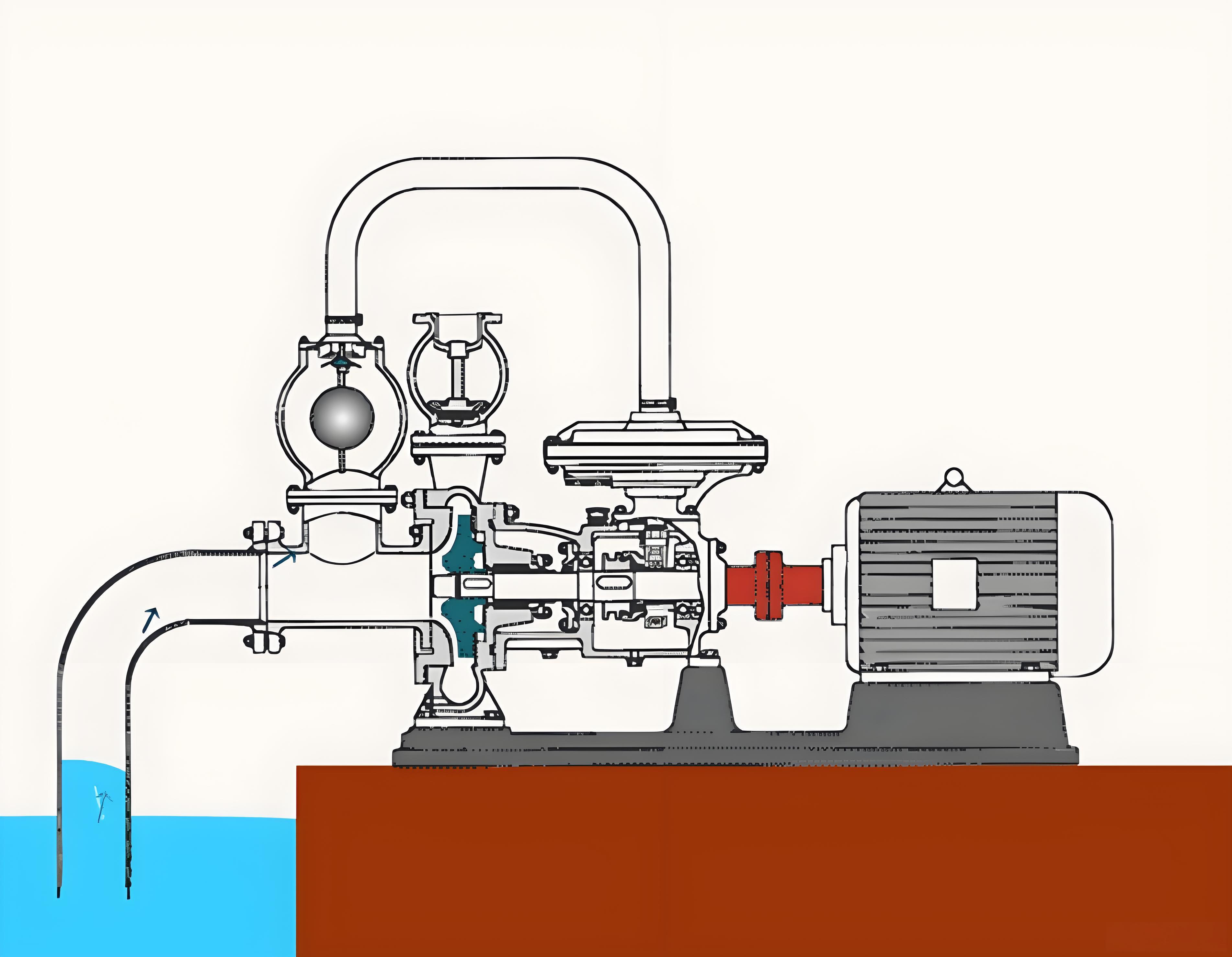
Self-Priming Centrifugal Pump
Does not require manually filling the pump casing with water prior to start-up; can automatically evacuate air from the pump. Petroleum, mining, ship offloading, chemical industry.
Submersible Centrifugal Pump
Designed to operate fully immersed in liquid. Features a highly sealed construction. Water conservancy projects, deep well water extraction, dredging, agricultural irrigation.
Vertical Centrifugal Pump
Vertical orientation allows it to be submerged into the liquid. Mining, cooling tower water supply, coal industry, and other applications requiring submersion.
In-Line Centrifugal Pump
Suction and discharge ports are on the same straight line. Compact size, high efficiency. Agricultural irrigation, chemical industry, petroleum, power generation.
Magnetic Drive Centrifugal Pump
Drives the impeller via magnetic coupling. No mechanical shaft seal; complete isolation between the fluid and the motor. Chemical plants, pharmaceuticals, food processing, aerospace; for handling corrosive, flammable, or toxic fluids.
Sewage Centrifugal Pump
Can handle fluids containing solids and long fibers. Sewage treatment plants, reservoirs, paper mills, industrial wastewater treatment.
Slurry Centrifugal Pump
Designed to handle slurries and viscous fluids containing abrasive solids like sand, silt, or oily residues. Mining, dredging, tunnel boring (e.g., shield tunneling).
-

Australia Residential & Garden Irrigation Pump Market Report
FLOSITE Market Insight Series
넶1 2026-06-30 -

FLOSITE Pump Division Engages with Industry Advances at FLOWTECH CHINA 2026
Industry Advances at FLOWTECH CHINA 2026
넶19 2026-06-17 -

The Rainy Season is Coming – Is Your Drainage Pump Ready?
– Is Your Drainage Pump Ready?
넶24 2026-05-27 -
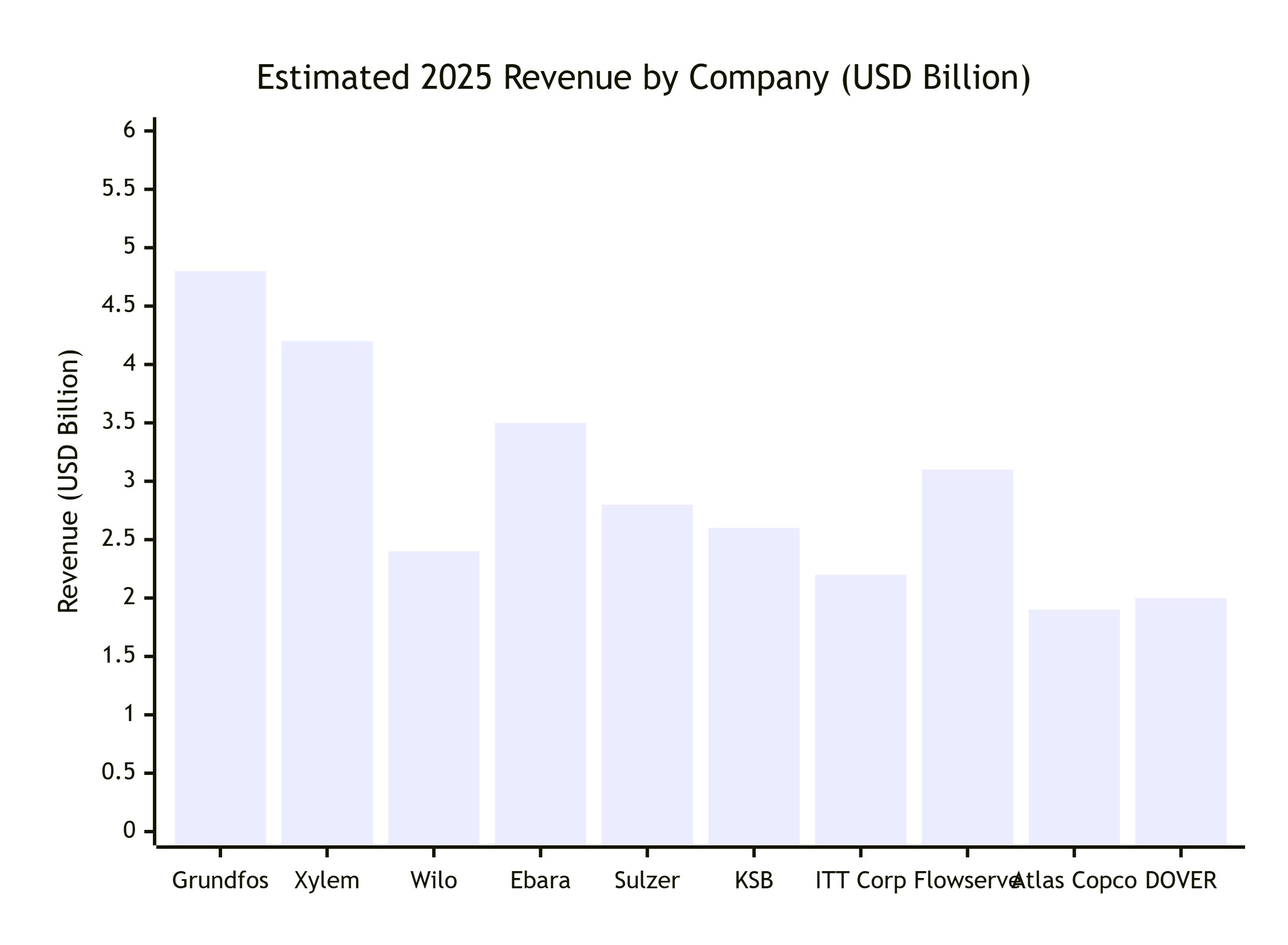
2025 Global Pump Industry Sales Ranking: Key Players & Market Trends
Key Players & Market Trends
넶33 2026-05-12


